More than 18,000 people in the US may have been infected with a diarrhoea-causing parasite, the Centers for Disease Control and Prevention (CDC) has said in its latest update.
Cyclosporiasis is an infection caused by a microscopic parasite, with the main symptom being frequent, watery and explosive diarrhoea. People can become infected by consuming food or water that contains the parasite.
The outbreak has now spread to 45 states. Michigan is hardest hit, reporting more than 10,000 cases so far, according to the state’s health department.
No deaths from the recent infections have been reported in the US. While the source has not yet been identified, past outbreaks have been linked to raw produce.
Where have cases been reported?
The CDC said on Wednesday that 6,707 people nationwide were confirmed to have cyclosporiasis. Another 11,500 cases were under investigation.
No deaths have been reported, but 423 patients have been admitted to hospital, the agency added.
According to the CDC, Michigan and Ohio are the states that have reported the most new cases.
‘Explosive diarrhoea’ outbreak remains a mystery as officials struggle to find sources
Each state also reports its own figures on the number of cases, which may differ from the CDC’s tallies.
- Michigan – 10,077 reported cases across the state as of 29 July, according to the state’s health department
- Ohio – 2,576 cases have been reported as of 23 July, according to local media citing the state’s health department.
- New York – 787 cases reported, with more than half coming from New York City alone, according to the state and city
- North Carolina – 718 people have been sickened since 1 May, with 24 cases requiring hospital admissions, according to the state
- Illinois – 707 total confirmed and probable cases as of 28 July, including 47 hospitalisations, according to the state
Other states with a large number of cases include Indiana, Illinois and North Carolina, according to the CDC.
The number of people sick with cyclosporiasis is likely higher than the number reported because some people recover without medical care and are not tested for the illness.
The CDC said it anticipates the case counts will continue to rise as new data comes in.
What is cyclospora?
Cyclosporiasis is an intestinal illness caused by a microscopic parasite, according to the CDC.
People can become infected by consuming food or water that contains the parasite.
The illness is not usually life-threatening, according to the CDC, and is less common than other foodborne illnesses such as salmonella and E. coli.
People who are infected with cyclospora may or may not experience symptoms. The illness usually causes diarrhoea “with frequent and sometimes explosive bowel movements”, says the public health agency.
If untreated, the illness may last from a few days to over a month, and symptoms may return after appearing to dissipate.
It usually takes about one week after infection to become sick.
Person-to-person transmission does not occur, according to Dr Caitlin Rivers, of the Johns Hopkins Center for Health Security.
The epidemiologist wrote in an 8 July newsletter that transmission was exclusively faecal-oral via ingestion of contaminated food or water.
What’s causing the outbreak?
Those who were infected “became sick after eating food in the United States”, the CDC said, and did not report any travel during the 14 days before they got sick.
No specific type of produce or any grower or supplier has been identified as the source.
“Contamination typically occurs at the farm or irrigation level, making traceback investigations difficult,” Rivers wrote.
Previous cyclospora outbreaks in the US and Canada have been linked to bagged salad mixes and kits, fresh cilantro, fresh basil, raspberries, snow peas and green onions.
How to stay safe
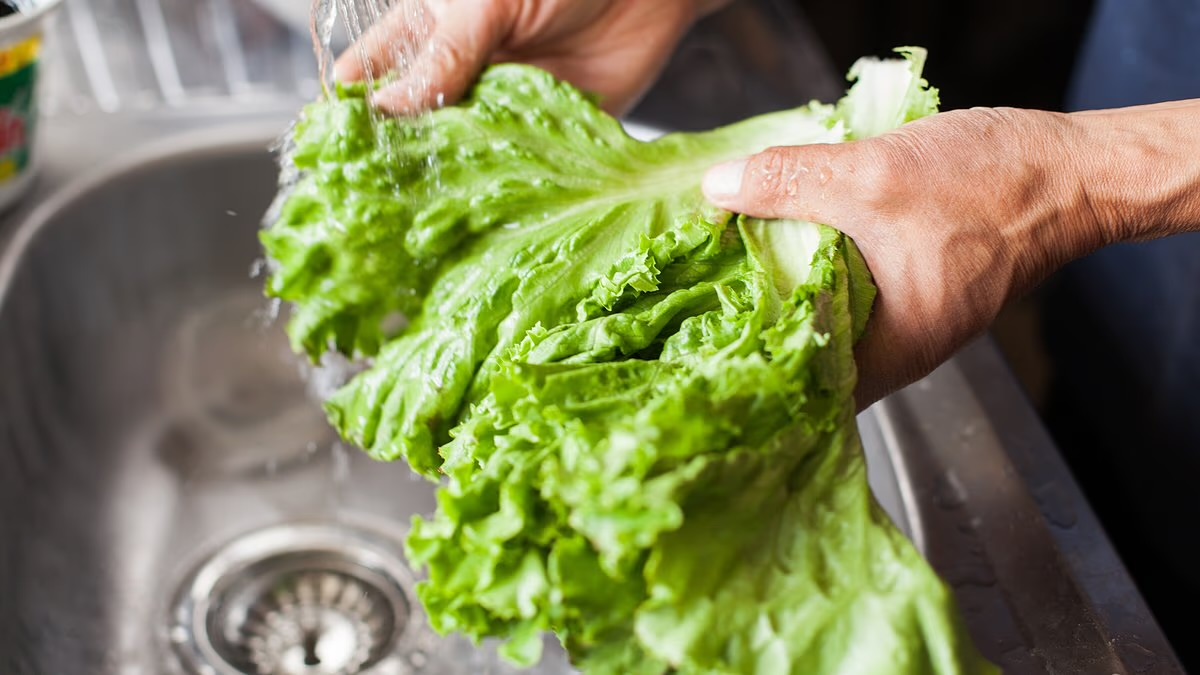
Given the large and increasing number of cases, Michigan’s health department has recommended that restaurants and kitchens preparing or serving raw produce reduce risk by thoroughly washing greens, cooking raspberries and leafy greens when possible, and removing outer layers of lettuce and green onions.
Amid speculation over the source of cases across the nation, the fast-food chain Taco Bell released a statement saying it was “voluntarily and temporarily removing limited ingredients at select restaurants as a precautionary measure”.
While public health officials have not confirmed a link to any specific ingredient, supplier, restaurant, or retailer, Taco Bell says it intends to closely monitor the situation and follow the guidance of the authorities.
While the US Food and Drug Administration says rinsing produce is unlikely to be effective, the CDC still recommends it.
People who are experiencing diarrhoea are urged to contact a health provider and ask about possible infection, officials said.