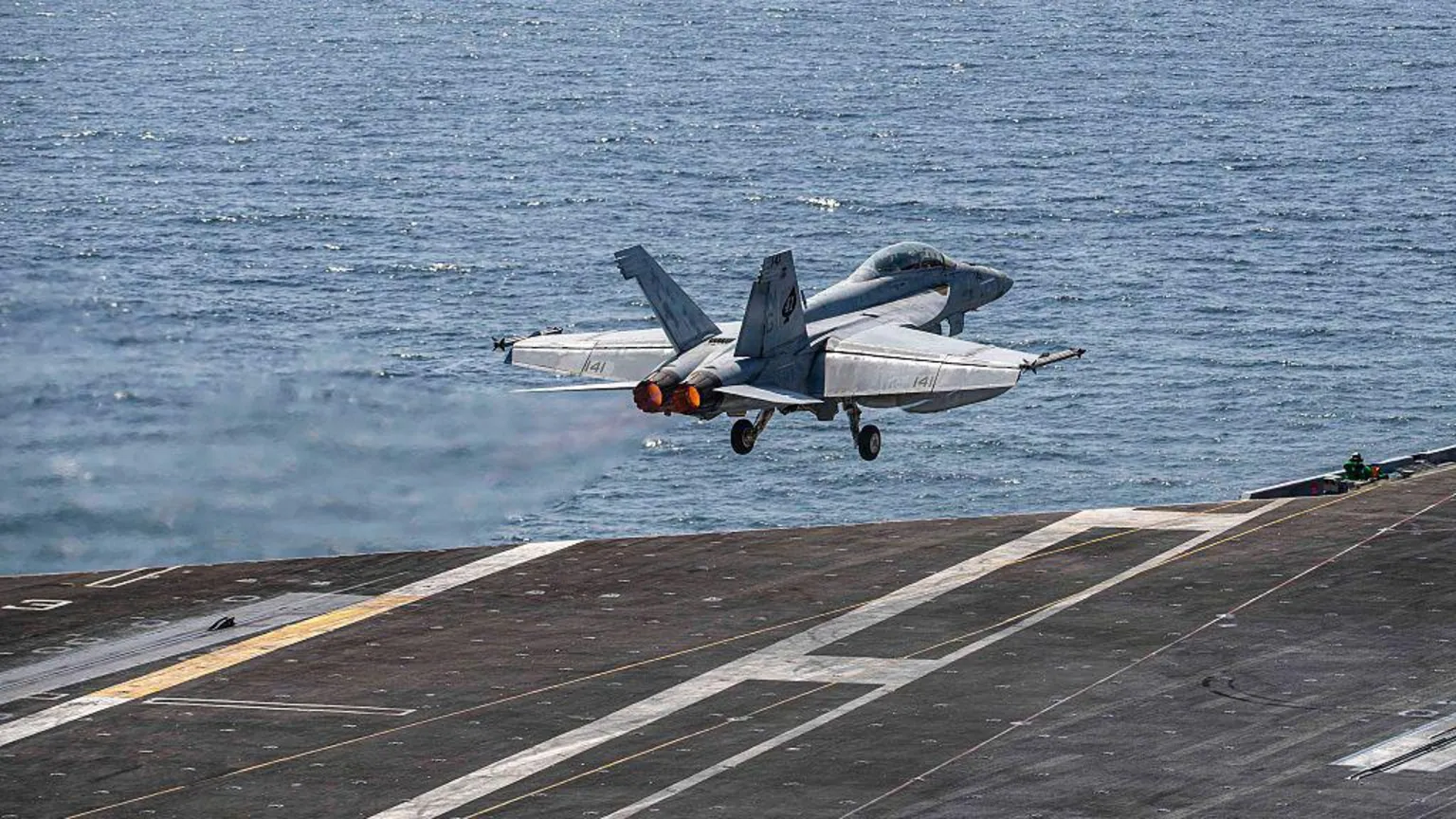
The US military has carried out new strikes on Iran, targeting a military site in Bandar Abbas, a strategic port city.
Central Command (Centcom) said its forces also shot down four Iranian one-way attack drones “that posed a threat around the Strait of Hormuz”.
Iran’s Islamic Revolutionary Guard Corps (IRGC) said it had retaliated by targeting a US air base, without providing details of the its location.
Meanwhile, Kuwait’s army said its air defences were intercepting “hostile missile and drone threats”, but did not specify where they were coming from.
The renewed hostilities threaten a fragile ceasefire between the US and Iran.
It is the second time in three days that the US has attacked targets in Iran – saying that the strikes were conducted in self defence.
The site in Bandar Abbas was struck as it was about to launch a fifth drone, Centcom said. Iranian media reported that explosions were heard to the east of the city.
Centcom described its actions as “measured, purely defensive, and intended to maintain the ceasefire”.
Iran condemned the strikes as “a grave violation of the ceasefire” and vowed that the Iranian government “will not leave any act of hostility unanswered.”
Earlier this week, the US confirmed a previous round of “self-defence” strikes on southern Iran on Monday in which they targeted Iranian missile sites and boats attempting to lay mines in the Strait, where thousands of commercial tanker ships are stranded as a result of the conflict.
Centcom said those strikes were designed “to protect our troops from threats posed by Iranian forces”.
The US also imposed sanctions on the “Persian Gulf Strait Authority” – the Iranian body tasked with collecting payments from ships travelling through the Strait of Hormuz.
Any ships that pay the authority could also be “exposed to the risk of sanctions”, the US Treasury Department said in a statement.
One-fifth of the world’s liquefied natural gas and oil normally pass through the shipping channel, and its closure has impacted global fuel trade.
Iran’s foreign ministry spokesman Esmaeil Baqaei said on Monday that Tehran was collecting fees for “navigational services” and it would continue to manage traffic through the waterway.